
“Loving yourself while taking time to reset and reflect is Self-care”
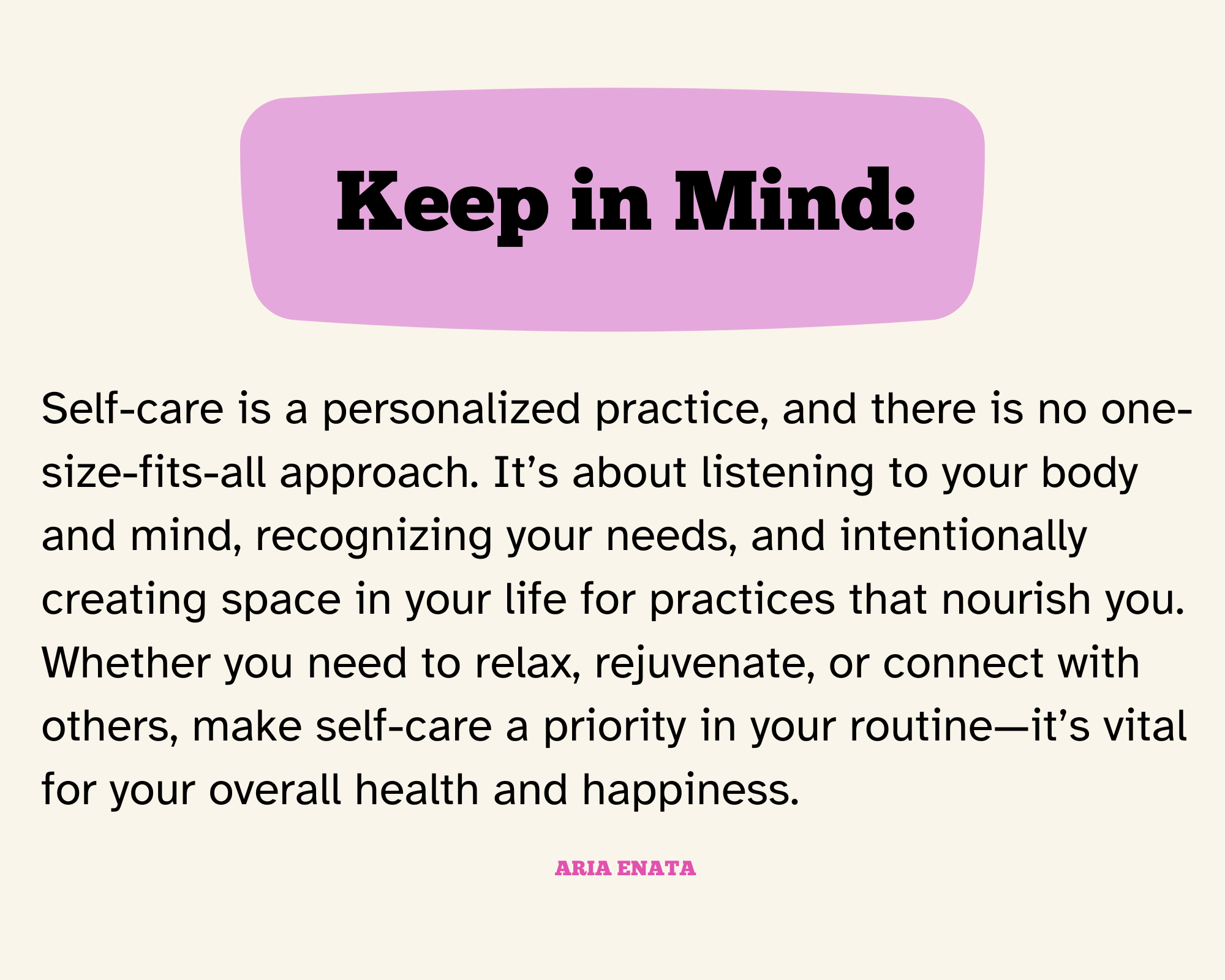
Self-care is essential for maintaining mental, emotional, and physical well-being. It is not just about pampering yourself, (which is very nice)— it’s about taking the time to nurture yourself so you can feel your best and manage life’s stresses.

The following effective self-care practices can be integrated into your daily, weekly or monthly routine:
1. Physical Self-Care
Exercise Regularly: Whether it’s yoga, running, dancing, or simple stretches, moving your body releases endorphins, boosts energy levels, and helps manage stress.
Get Enough Sleep: Prioritize a consistent sleep schedule. Aim for 7-9 hours of quality sleep each night to allow your body and mind to recharge.
Eat Nourishing Foods: A balanced diet that includes fruits, vegetables, lean proteins, and whole grains can improve mood, energy, and overall health.
Hydrate: Drinking enough water is essential for physical and mental clarity. Aim for at least 8 glasses a day, more if you’re active.
Skin Care Routine: Taking time for a skincare routine—whether it’s a simple cleanse and moisturize or a more elaborate regimen—can help you feel refreshed and boost confidence.

2. Mental and Emotional Self-Care
Mindfulness and Meditation: Practices like mindfulness meditation or deep breathing exercises can reduce anxiety, improve focus, and promote emotional balance. Even a few minutes a day can make a big difference.
Journaling: Writing down your thoughts and feelings can help process emotions, reduce stress, and improve self-awareness. It can also be a great outlet for creativity.
Set Boundaries: Learning to say no and setting healthy boundaries in your personal and professional life is crucial for protecting your energy and emotional health.
Therapy or Counseling: Speaking to a therapist or counselor can provide support, perspective, and practical strategies for managing stress, anxiety, or any mental health concerns.
Practice Gratitude: Regularly acknowledging the things you’re grateful for, either in a journal or in your mind, can improve mental well-being and foster a positive mindset.
3. Social Self-Care
Connect with Loved Ones: Spend quality time with friends, family, or pets. Socializing strengthens your sense of community and belonging.
Limit Social Media: Taking breaks from social media helps you avoid comparisons, negative influences, and emotional fatigue. Use your time to connect in real life rather than scrolling.
Engage in Activities You Enjoy: Whether it’s a hobby, sports, or just a walk outside, do things that bring you joy and fulfillment.

4. Spiritual Self-Care
Engage in Reflective Practices: This could include prayer, meditation, or spending time in nature—activities that help you connect with a sense of inner peace or higher purpose.
Gratitude Practice: A spiritual form of self-care can include noting what you are thankful for, which can enhance your sense of connection to the present moment.
Quiet Time for Reflection: Spend a few moments daily in quiet reflection, whether it’s during a walk, while journaling, or sitting in silence.
5. Creative Self-Care
Pursue a Hobby: Whether it’s painting, knitting, cooking, or gardening, engaging in creative activities can help relieve stress and foster a sense of accomplishment.
Try Something New: Experimenting with new creative outlets (like playing an instrument, writing a poem, or crafting) can provide a fresh perspective and spark joy.

6. Relaxation and Restorative Self-Care
Take a Bath: Soaking in a warm bath with calming scents (like lavender or eucalyptus) can help you relax both mentally and physically.
Unplug from Technology: Give yourself a digital detox—turn off your devices for a set amount of time each day to reduce mental overload and promote relaxation.
Practice Deep Breathing: Simple techniques like deep belly breathing or box breathing can calm your nervous system, reduce stress, and improve mental clarity.
7. Personal Development Self-Care
Set Goals: Whether personal, professional, or health-related, setting and achieving small goals helps you stay motivated and builds a sense of accomplishment.
Learn Something New: Keep your brain sharp by engaging in learning opportunities, like reading, taking a class, or exploring new interests. Personal growth is a powerful form of self-care.

8. Financial Self-Care
Manage Finances: Taking time to organize your finances—whether it’s budgeting, saving, or planning for the future—can reduce stress and give you a sense of control.
Treat Yourself Mindfully: Sometimes, self-care includes giving yourself permission to splurge on something special that brings joy, but do so in a way that aligns with your financial goals.
9. Environmental Self-Care
Create a Calming Space: Surround yourself with a peaceful, organized environment that reflects your needs for relaxation. This could include decluttering, adding plants, or setting up a cozy reading nook.
Fresh Air and Nature: Spending time outside in nature—whether in a park, garden, or just on your balcony—can help you feel recharged and boost your mood.

10. Fun and Playful Self-Care
Engage in Playful Activities: Allow yourself to have fun and let loose! Go to an amusement park, have a game night, or take a spontaneous trip. Play brings joy and reduces stress.
Watch a Movie or Read a Book: Sometimes, self-care is simply taking time to enjoy a favorite movie or immerse yourself in a good book. It allows you to escape and unwind.
 ARIA ENATA
Leave a comment